

Structured Cabling
Structured cabling is a standardized, organized system of wiring that provides a reliable, scalable, and flexible infrastructure for telecommunications and data networks. It replaces messy point‑to‑point wiring with subsystems governed by global standards, ensuring predictable performance and easier troubleshooting.
Scalability: Supports growth without rewiring.
Reduced Downtime: Clear labeling and patch panels make troubleshooting faster.
Cost Efficiency: Lower long‑term maintenance and upgrade costs.
Flexibility: Easily accommodates new technologies (VoIP, IoT, cloud systems).
Performance: Standards ensure consistent speed and reliability.
Structured cabling is a centralized installation which allows the integration and interconnectivity of voice, data, video, security, etc. (consisting of cable and hardware like patch panels and other connectivity products) to be wired to a common location for access, testing, and future growth.
Key Benefits
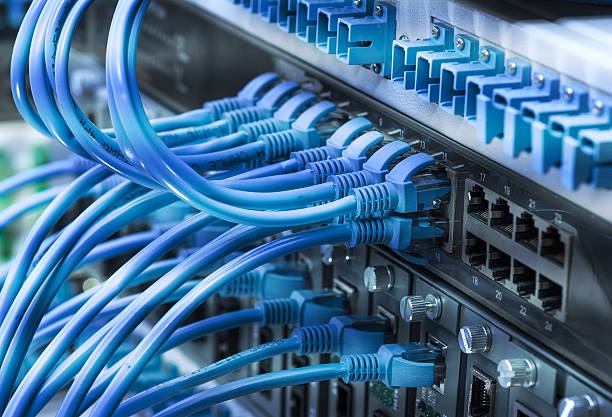
Definition: A systematic approach to cabling that uses standardized subsystems to support multiple hardware and applications.
Purpose: Ensures interoperability, simplifies upgrades, reduces downtime, and supports future scalability.
Standards: ANSI/TIA‑568 (U.S.), EN 50173 (Europe), ISO/IEC 11801 (global).
A structured cabling system is a complete system of cabling and associated hardware, which provides a comprehensive telecommunications infrastructure. This infrastructure serves a wide range of uses, such as to provide telephone service or transmit data through a computer network.
Structured cabling is the design and installation of a cabling system that will support multiple hardware uses and be suitable for today's needs and those of the future. With a correctly installed system, current and future requirements can be met, and hardware that is added in the future will be supported.
The performance of a network infrastructure depends not only on the quality of its components, but also on the quality of the cabling installation. Each of our network infrastructures is installed and tested by trained quality assurance engineers and technicians.
A properly installed cable network should function efficiently. SIPTECH's project plans are designed and managed using time lines and the best infrastructure for the client’s needs. From onsite mapping to deployment, we are your partner.
Data and voice cable installations Cat 5, 5e, 6, 7 (fire code approved)
New construction projects or existing office
Communication room installation
Backbone installation: light boxes, backbone lines, wire management, fiber patch cords, inner-duct tubing
Fiber optic cable installation
Patch panel installation
Re-termination of existing data Cat 6, 6A, 7 patch panels
Office equipment relocation services for modular furniture or open space office equipment rack
Network hub and switch installations
Complete equipment racking system including ladder racks wire managers server shelves category 6, 6A, 7 RJ45 data jack installation surface mount and flush wall plates
We Supply, Install and Guarantee the Following Services:
SIPTECH is ready to manage your technology infrastructure development.