

Air Blown Fiber Optics
Air Blown Fiber Optics (ABF) is a modern cabling solution that uses compressed air to install lightweight fiber bundles into pre‑installed microducts, offering unmatched flexibility, scalability, and cost efficiency compared to traditional fiber deployment. It is increasingly adopted in telecom, data centers, and smart city projects worldwide.
Scalability: Add or replace fibers without digging or replacing ducts.
Cost Efficiency: Install only the fiber needed at the time, reducing upfront investment.
Speed: Faster deployment compared to pulling traditional fiber cables.
Flexibility: Supports future moves, adds, and changes with minimal disruption.
Environmental Benefits: Less material waste and reduced need for large cable inventories.
With Air Blown Fiber, customers can install the infrastructure throughout a building and even across the campus without having to over-build their fiber optic system. Air Blown System enables you to save cost and time.
Key Benefits
Definition: A fiber optic system where microducts are laid first, and fiber bundles are later “blown” into them using compressed air.
Origin: Developed in the early 1980s, refined for modern telecom and enterprise networks.
Purpose: Enables rapid installation, easy upgrades, and minimal disruption when expanding or changing network capacity.
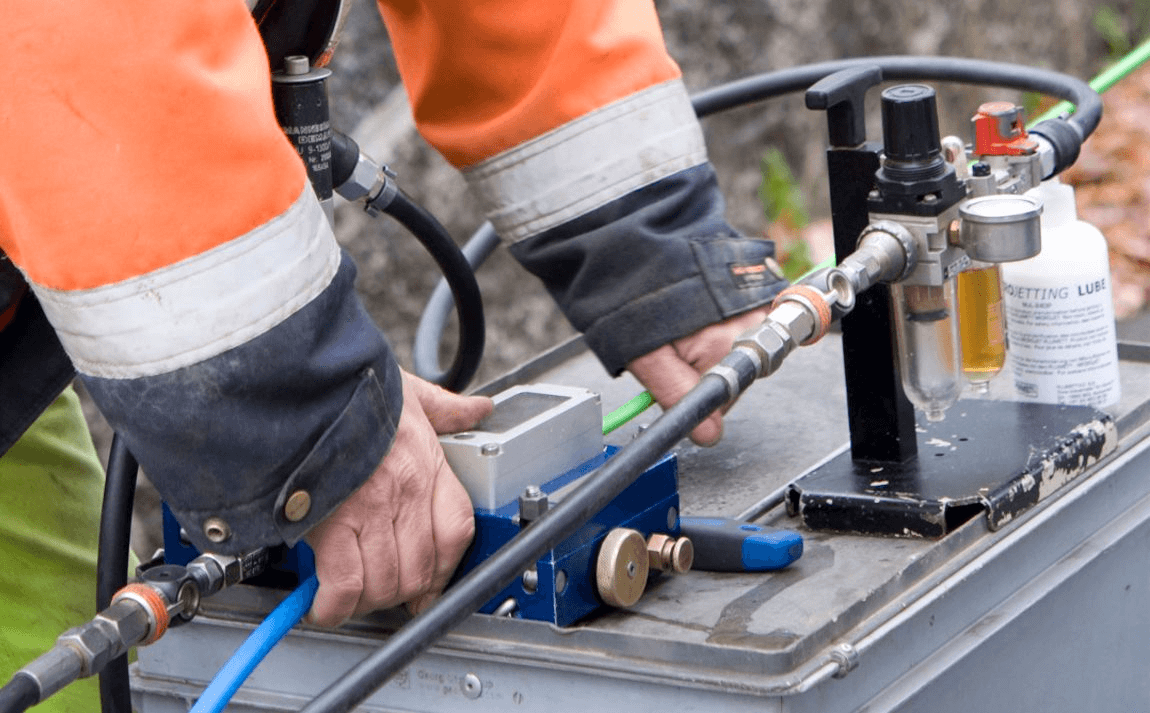
The blowing technique is perhaps the most well-known of these new techniques. Experimental work yielded insight into both blowing and pulling techniques. It was discovered that windings in a duct trajectory often contribute more to the force build-up in the cable than bends.
Outside plant personnel are very familiar with the pulling method of installing cable. Thread a line through the duct, attach the line to the cable, and pull or tug the cable through the duct. The force needed to pull the cable usually comes from a capstan or hand -over-hand pulling of the rope. This force is needed to overcome the cable’s frictional resistance to movement. Length of installation is limited by the maximum force allowed on the cable.
Air-assisted installation must overcome the Air same frictional force to move cable, but it does this in a very different way. The force in air blowing first comes from a mechanical device which pushed the cable; and second, from the force of moving air on the cable jacket, or alternatively, the force of air on a piston or carrier at the front end of the cable. This technique allows the air blown cable to “float” inside the Microduct during installation while minimizing sidewall pressures by reducing friction between the cable and the duct wall.